Author: admin

  • Africa’s Climate Finance Paradox: Risky Terrain or Ripe Opportunity?

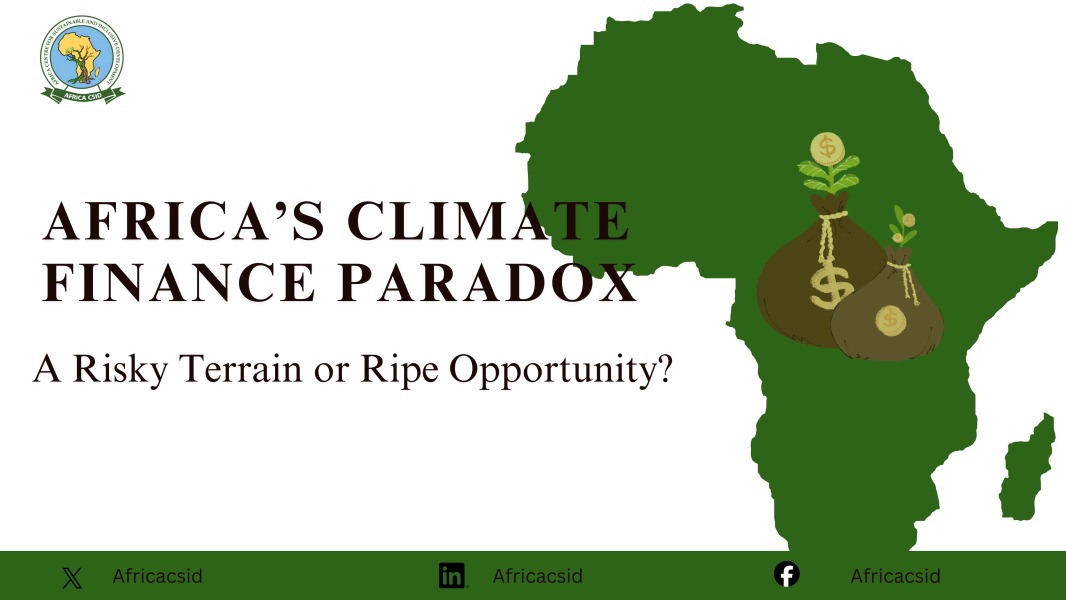
    Africa’s Climate Finance Paradox: Risky Terrain or Ripe Opportunity?

    Africa’s climate finance story is a paradox – caught between the weight of risk and the promise of opportunity. It is a landscape where billions are pledged but access remains elusive, where communities face mounting climate shocks yet hold untapped potential for resilience and innovation.

    As a region highly vulnerable to climate change, Africa receives only a fraction of the funding needed to respond to the Climate shocks. And while the continent is bursting with potential from a huge youth population to renewable energy, green innovation and so much more, investors still hesitate to finance Africa’s climate resilience and adaptation to the devastating effects she is experiencing.

    So why is this so and why should we care?

    Climate change is reshaping Africa’s environmental, economic, and social landscapes, intensifying vulnerabilities across agriculture, water resources, public health, and socioeconomic stability. And when Africa doesn’t get the support it needs to adapt and thrive, the ripple effects touch on everyone and every sector. One such support is through Climate financing.

    So Why Is Africa Still Underfunded?

    Here’s the hard truth: many investors still see Africa as “high risk” for investment and this label has stuck, even though it’s unfair and outdated.

    First, there is the issue of climate vulnerability. Africa faces more extreme weather than most regions from droughts, floods, and unpredictable seasons that threaten food security and livelihoods. That makes long-term projects seem risky.

    Then there’s the economic side. Many African countries are dealing with debt and tight budgets. They don’t have much room to invest in big climate solutions or repay loans quickly. And when governments are stretched thin, it’s harder to attract private investment.

    Finally, there’s the perception of weak governance. Investors worry about corruption, unclear regulations, or political instability. Even when countries are making progress, these concerns can scare off funding.

    The result? Africa ends up being charged higher interest rates on loans and gets offered short-term, low-risk projects instead of bold, transformative ones. Africa also struggles to access concessional finance, the kind of affordable funding that’s essential for adaptation and resilience building

    What is being forgotten is that there are always two sides of a coin. Despite the challenges, Africa is one of the most exciting places to invest in climate solutions. 

    By 2050, Africa’s youth population, already the largest in the world, is projected to double to over 830 million. The OECD reports that by the same year, the continent’s working-age population (15-64 years old) will rise from 849 million in 2024 to 1.56 billion, accounting for 85% of the global workforce increase.

    Across the continent, young people are building green value chains through eco-friendly farming, recycling businesses, nature-based solutions and green startups which aren’t just good for the planet but also creating jobs and boosting local economies.

    According to Forbes Africa, young people are key to cultivating a more sustainable and healthier planet with youths from Africa leading the way in developing innovative solutions for the continent’s challenges.

    Africa also holds a treasure trove of clean energy waiting to be tapped. From the blazing sun in the Sahel to the steady winds of the Rift Valley and the geothermal heat bubbling beneath East Africa’s crust, the continent is naturally equipped for a renewable revolution.

    Countries such as Kenya, Ethiopia, Morocco, Egypt and South Africa are at the forefront of the clean energy revolution in Africa. Each of these countries has implemented significant renewable energy projects that are making substantial impact on their energy landscape.

    Most importantly, climate leadership is rising. Youth groups, civil society organizations, and local governments are stepping up with bold ideas and real action. They’re not waiting for permission; they’re leading the way.

    So what is the way forward for Africa?

    To unlock Africa’s climate potential, we need to make investments safer through tools like insurance, guarantees, and blended finance. We need to build trust by supporting transparency, good governance, and community-led projects. We should also push for fair funding, concessional finance, South-South partnerships, and more support for local change makers.

    We need to think about regional integration, shared infrastructure, and harmonized climate policies that help scale solutions across borders.

    Ultimately, through coordinated efforts and strategic investments, African nations can transform the challenges of climate change into opportunities for resilience and growth.
  • Bridging Policy and Action: Launch of Kenya’s Gender Mainstreaming Guidelines for Climate Action

    Bridging Policy and Action: Launch of Kenya’s Gender Mainstreaming Guidelines for Climate Action

    Climate change in Kenya is not a distant abstraction. It is lived daily in the shrinking grazing lands of pastoralists, in the dwindling fish stocks of Lake Victoria, in the delayed rainfalls affecting small scale farmers in the long walks women make to fetch water, the silent burdens carried  by the elderly and persons with disability during floods and droughts, the water flow-backs from the Rift Valley lakes in the case of Lake Naivasha and so much more.

    Yet, these impacts are not evenly distributed. Vulnerability is shaped by gender, age, poverty, and social status. Some harms are recognized, others remain invisible.

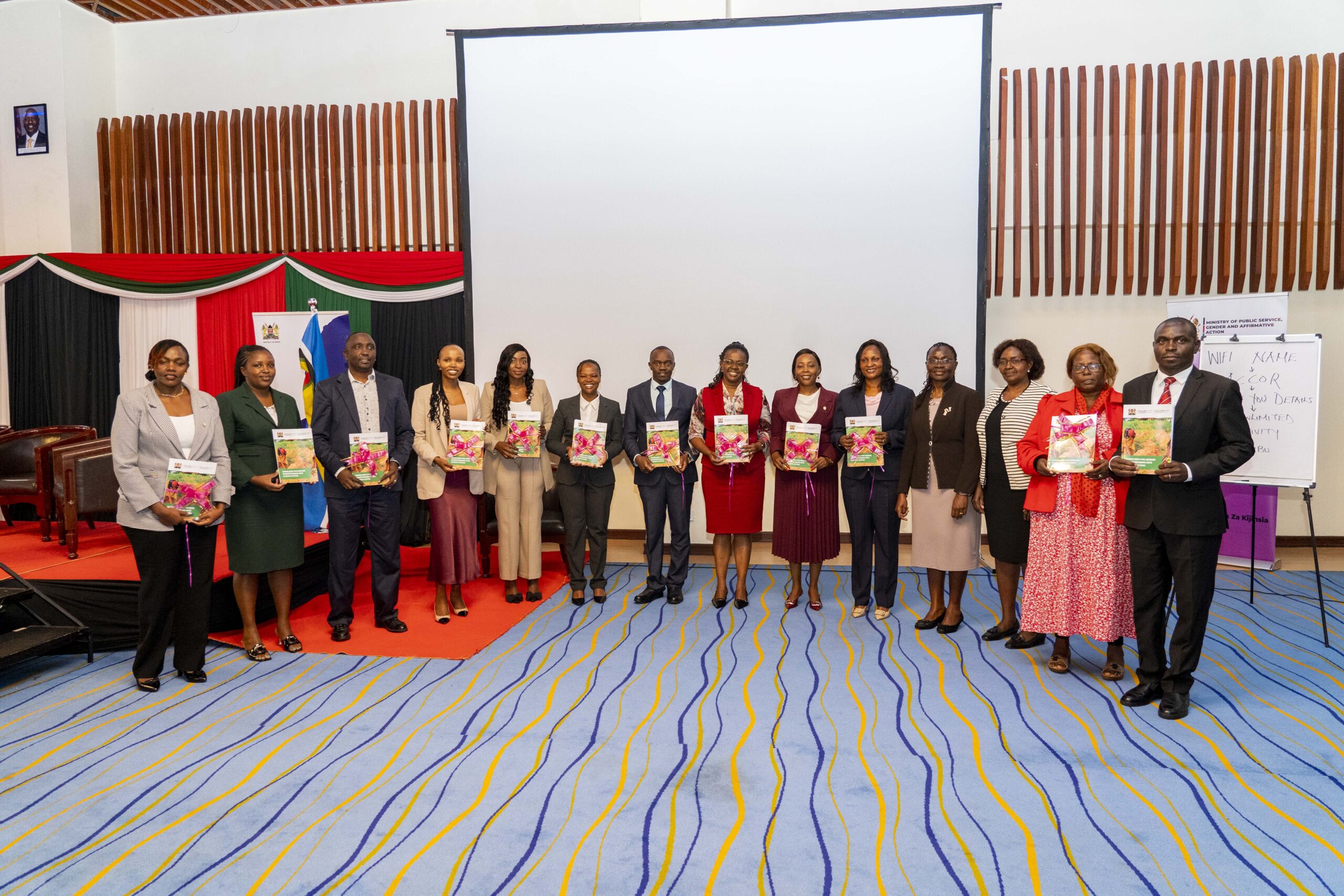
    Six months ago, Kenya took a decisive step forward by developing the Guidelines for Gender Mainstreaming into Climate Action. This landmark document was the product of collaboration between the State Department for Gender Affairs and Affirmative Action, the State Department for Environment and Climate Change, and the NDC Partnership, with Africa CSID providing technical leadership throughout the process.

    On 25th May 2026, the Guidelines were officially launched, marking a significant milestone in the country’s climate governance journey. More than a policy document, the Guidelines serve as a comprehensive framework for seeing, measuring, and responding to the differentiated ways climate change affects women, men, youth, and marginalized groups.

    The launch, held during the National Gender Sector Working Group Biannual Meeting, was a moment of national ownership. The Cabinet Secretary for Gender, Culture and Children Services presided as Chief Guest, joined by the Principal Secretary for State Department for Gender Affairs and Affirmative Action, ambassadors, UN leaders, Members of Parlimaent, civil society representatives, and grassroots voices from across the country. The breadth of participation underscored a collective commitment that climate action in Kenya must be gender-responsive, inclusive, and transformative.

    The Guidelines are practical and grounded. They provide tools for conducting gender analysis, frameworks for gender-responsive budgeting, and systems for monitoring, reporting, and verification (MRV) that demand sex and gender disaggregated data. The guidelines emphasize that climate policies and projects must not only acknowledge inequality but actively dismantle it.

    They remind us that resilience is built in communities where women’s unpaid survival labor, youth innovation, and indigenous knowledge sustain life amid crisis. By mainstreaming gender into climate action, and devevelpoing guidelines to support the processes, Kenya acknowledges that effective resilience requires equity, efficiency, and empowerment.

    Africa CSID’s  technical support enriched the Guidelines with approaches that stakeholders can apply at both national and county levels. We worked to ensure the document is not aspirational but actionable; a living tool that diverse state and nonstate actors like ministries, county governments, and community organizations can use to design interventions that leave no one behind.

    The challenge now lies in implementation. These guidelines only matter if they shape budgets, influence projects, and change lives. Dissemination must be deliberate, training must be continuous, and monitoring must be rigorous. Africa CSID remains committed to supporting stakeholders in translating these frameworks into tangible outcomes, from grassroots resilience projects to national climate strategies.

    Climate change is not neutral. And neither should our response be.