For the first time, it was not only the voices in the COP plenary that mattered, but also the hands interpreting them. As we followed the opening plenary of COP31 in Antalya, Türkiye, on 9 November 2026, one development particularly caught our attention: the presence of sign language interpreters. It may have appeared to be a small addition to the proceedings, but for those of us who have consistently advocated for more inclusive climate governance, it was a significant and encouraging moment.
For years, we have called for UNFCCC processes to become more accessible to persons with disabilities and to address the barriers that continue to limit meaningful participation in global climate decision-making. Seeing sign language interpretation integrated into the opening plenary was therefore a welcome indication that these calls are receiving attention. It was also a reminder that inclusion is not beyond our reach. It is a matter of institutional commitment, deliberate planning and political will.
But as encouraging as this development is, we found ourselves wondering: Will this become a consistent feature of the UNFCCC processes, or will it remain a positive experience confined only to COP31?
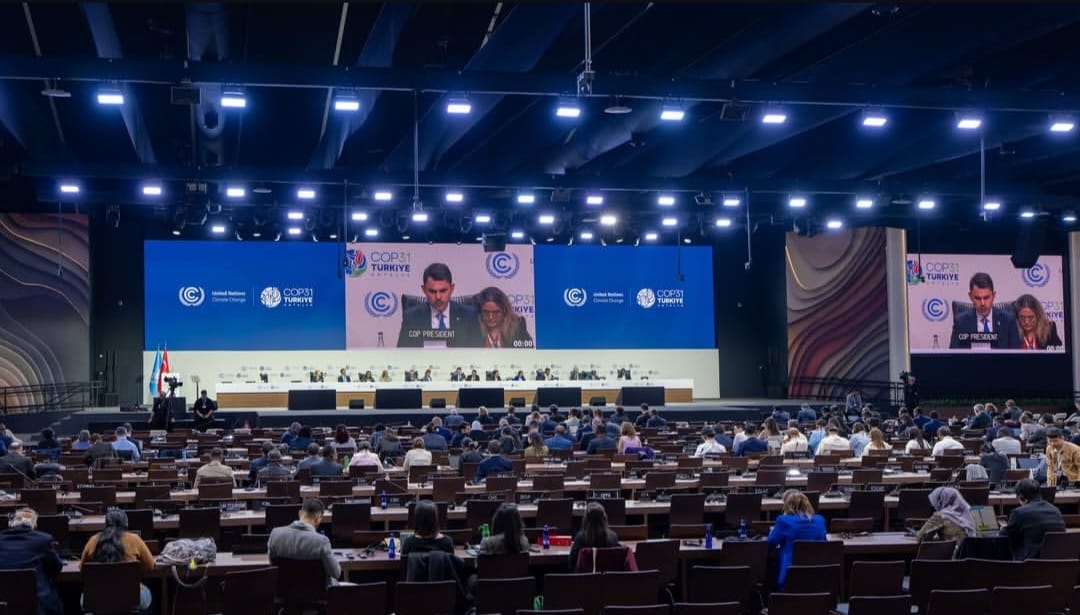
Sign language interpretation was not the only development that caught our attention. We also witnessed interpretation between Turkish and English during the plenary proceedings. While the arrangement was limited to these languages, it offered another important indication that the UNFCCC processes can become more linguistically inclusive.
There was a similar attempt during COP29 in Baku, Azerbaijan, where interpretation from Azerbaijani into English was introduced. However, the arrangement was reportedly discontinued following concerns that some information was being lost in translation, and proceedings subsequently relied on English.
The experience in Antalya therefore presents an interesting opportunity to assess whether such arrangements can be sustained effectively throughout the negotiations. Will the interpretation continue? Will it maintain the accuracy required in highly technical and politically sensitive negotiations? And could a successful experience provide the confidence needed to expand interpretation services in future COP processes?
If the arrangement proves effective, it could strengthen the case for progressively introducing interpretation across all six official United Nations languages. After all, climate change is a global challenge, and the processes established to address it should not be accessible only to those who are proficient in English. Language should never determine whose voice counts in global climate governance.
Of course, interpretation alone does not guarantee meaningful participation. However, removing language barriers is an important step towards ensuring that more voices can contribute effectively to the decisions that shape our collective future.
While these developments offered reasons for optimism, the opening of COP31 also reminded us that progress in international climate negotiations is rarely straightforward. The conference officially commenced with the adoption of the agendas, allowing negotiations to proceed.
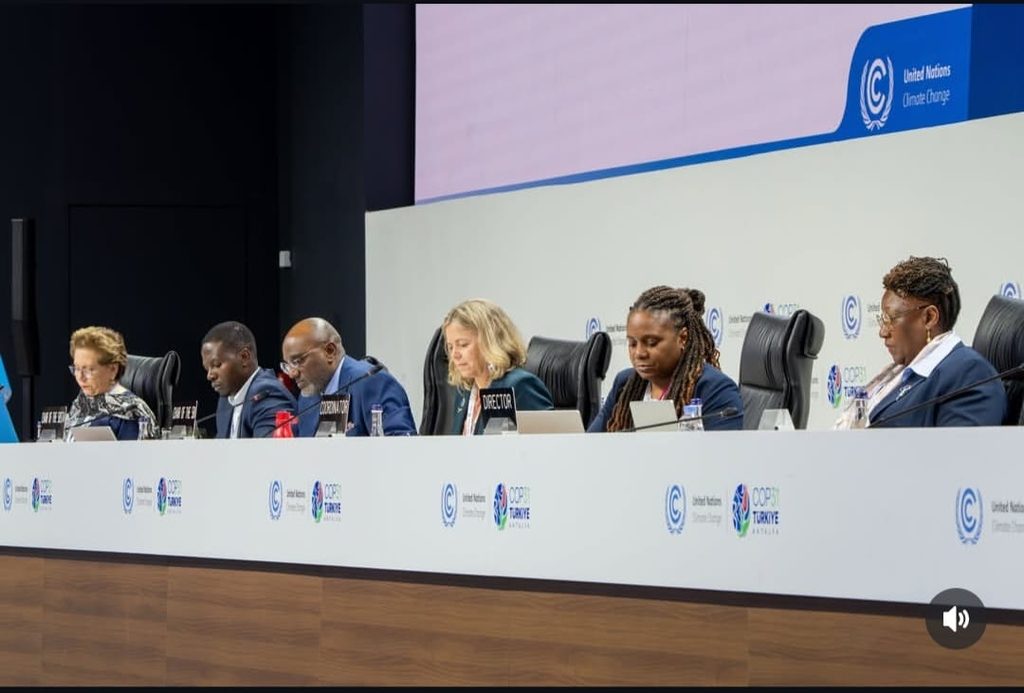
One important development was the agreement to include the Climate Finance Work Programme (CFWP) as a standalone agenda item under the Conference of the Parties serving as the meeting of the Parties to the Paris Agreement (CMA). This is significant because climate finance remains one of the most consequential issues in international climate negotiations, particularly for developing countries that face increasing climate impacts despite having contributed relatively little to historical global emissions.
A dedicated agenda item provides an opportunity for focused discussions on climate finance. However, its value will ultimately depend on the substance of the negotiations and the decisions that emerge.
Not every proposal received the same level of consensus. The proposal to include tripling adaptation finance as a standalone agenda item was not agreed upon by Parties. This was particularly notable given the discussions that began at COP30 in Belém, Brazil, where Parties called for efforts to at least triple adaptation finance by 2035.
However, the absence of a standalone agenda item does not mean that tripling adaptation finance has disappeared from the negotiations. The issue can still be addressed through existing agenda items relating to finance and adaptation. And this is where the real work begins.
The commitment emerging from Belém was an important political signal. For many developing countries, particularly across Africa, adaptation finance is not an abstract negotiating concept. It is about the resources required to respond to increasingly unpredictable rainfall, prolonged droughts, flooding, food insecurity, displacement and other climate-related risks. Yet the announcement of a financing ambition is only the beginning.
The difficult questions concern implementation. What exactly are we tripling? What baseline will be used to measure the increase? How will the additional finance be mobilized? Will the resources be predictable and accessible? How will progress be tracked, and who will be accountable if commitments are not delivered?
These questions determine whether the commitment will translate into meaningful support for countries and communities already experiencing the consequences of climate change. Without a clearly established baseline, it becomes difficult to assess whether adaptation finance has genuinely tripled.
Without predictable financing arrangements, developing countries may continue to struggle to plan and implement long-term adaptation interventions. And without appropriate accountability and access mechanisms, increased global financial commitments may not necessarily translate into resources reaching the communities that need them most.
This is why we believe the discussions in Antalya must go beyond reaffirming the tripling ambition.
They should help establish a credible pathway for its implementation, including clarity on the baseline, resource mobilisation, predictability, transparency, accountability and accessibility for developing countries.
The Climate Finance Work Programme offers a potentially important negotiating space for advancing broader climate finance discussions. Whether it contributes meaningfully to resolving these outstanding adaptation finance questions will depend on the scope of its work and the willingness of Parties to move towards concrete outcomes.
Reflecting on the opening of COP31, we see two developments that, although seemingly different, speak to the same fundamental question: What does meaningful inclusion in global climate governance really look like?
The presence of sign language interpreters and the introduction of language interpretation demonstrate that barriers to participation can be addressed when there is sufficient commitment.
At the same time, the negotiations on adaptation finance remind us that inclusion cannot end with participation.
It must also extend to the decisions made, the resources mobilised and the people who ultimately benefit from global climate action.
There is little value in creating more accessible negotiating spaces if the outcomes do not respond adequately to the needs and realities of the most climate-vulnerable countries and communities.
Equally, ambitious climate commitments cannot be considered successful simply because they have been adopted. Their success must be demonstrated through implementation.
As COP31 negotiations continue in Antalya, we remain encouraged by the signs of progress on accessibility and cautiously optimistic about the opportunities to advance climate finance discussions.
But we will be watching closely.
Will sign language interpretation become a sustained institutional practice? Will language accessibility be expanded? Will Parties find a credible way forward on tripling adaptation finance?
These are among the questions that will determine whether the early promise of COP31 translates into lasting progress.
Ultimately, an inclusive COP is not simply one where more people can understand what is being said. It is one where more people can meaningfully participate in shaping decisions, and where those decisions deliver for the people who need climate action the most.
Leave a Reply